
Black garden ants
The black garden ant is the ant most people find in their kitchen. Workers are dark brown to black and about 3 to 5 mm long, and the queen is much bigger, close to 1 cm. The nest is usually outside, under paving, patios, lawns, walls or the base of the house, and workers come in through gaps at doors, windows and skirting boards to look for food.
They are a nuisance more than a health risk, but trails across worktops and into food cupboards are unpleasant and can spoil food.
Pharaoh ants
Pharaoh ants are tiny, about 2 mm long, and pale yellow to light brown. They cannot survive a UK winter outdoors, so they live in heated buildings such as blocks of flats, hospitals, care homes, hotels and bakeries. They nest in warm, hidden places: wall voids, behind skirting near heating pipes, inside electrical fittings and under kitchen units.
A Pharaoh ant colony has many queens and can split into new nests when it is disturbed. Sprays and strong cleaning products often set this off, so a small problem in one flat can spread through a building. In hospitals and care homes they are a hygiene risk, as they move between waste areas and clean ones.
Other ants you may see
A few other species turn up in UK gardens and, now and then, indoors:
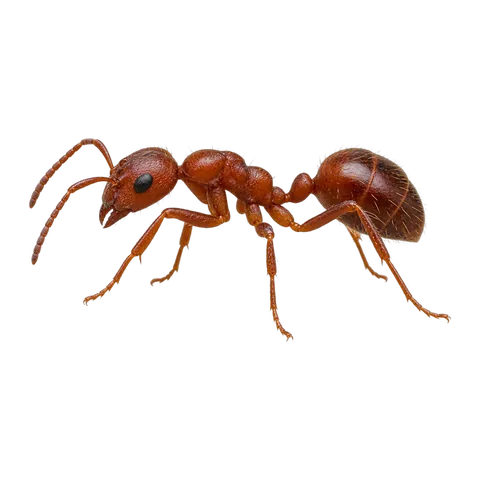
- Red ants: small, reddish-brown garden ants that can sting. They nest under stones and in lawns, and the sting is sharp but short-lived.
- Yellow meadow ants: pale yellow ants that build grassy mounds in lawns and fields. They rarely come indoors.
- Wood ants: large red and black ants of woods and heaths that build mounds of pine needles and spray acid when disturbed. They do not come into homes and their nests are best left alone.
How an ant colony works
An ant colony is a family. In a black garden ant nest a single queen lays all the eggs, and she can live for many years. The workers are all female and do not breed. They look after the eggs and larvae, dig the nest and go out to find food.
A worker that finds food lays a scent trail on the way home, and others follow it. This is why one ant on the worktop can become a line of ants within an hour or two. Ants want sugar for energy and protein for the larvae, so sweet spills, pet food and crumbs all draw them in. Killing the workers on a trail does little to the colony while the queen keeps laying.
Once a year, on warm summer days, colonies release winged queens and males to mate. These are the flying ants seen in July and August.
Why ants come indoors
Ants come in for food and, in dry weather, for water. They are most active from spring to early autumn, when garden colonies are busy and growing. Ants seen indoors in winter usually point to a nest in a heated part of the building, or to Pharaoh ants. Wiping up sweet spills straight away, keeping sugar, honey and jam in sealed jars and sealing gaps along skirting boards and door thresholds all help.
When to call a professional
A short trail in summer can often be dealt with by finding the gap and sealing it. Ants that keep coming back, a nest inside the walls or under the floor, or tiny yellow ants in a heated flat are worth having looked at. With Pharaoh ants, avoid sprays and call early, as treatment works best before the colony spreads. We identify the species and place bait where the workers will find it and carry it home. A photo on WhatsApp helps us tell which ant you have.