
European hornet nests and Asian hornet reporting
We treat European hornet nests that put people at risk. If we suspect an Asian hornet, we report it to the Non-Native Species Secretariat so the national team can deal with it.
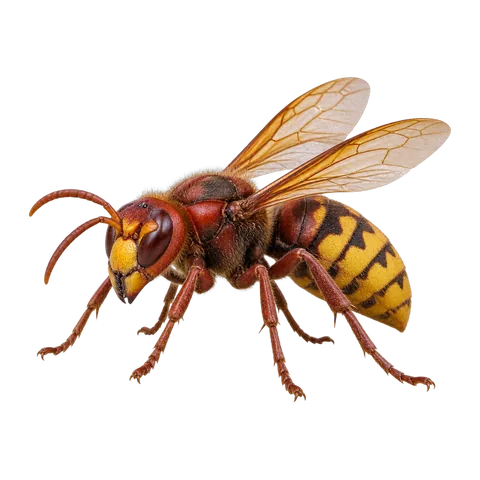
Signs of hornets
- Large wasp-like insects, up to 3.5 cm long, with a chestnut brown and yellow body.
- A deep, loud buzz around a hollow tree, wall cavity, shed or loft.
- Hornets flying after dark and drawn to lit windows.
- A brown, papery nest in a sheltered cavity.
- A dark hornet with a single orange band near the tail and yellow tips to its legs, which may be an Asian hornet.
How we treat hornets
Identify
We confirm the species from the insects and the nest, as European and Asian hornets need different action.
Treat or report
European hornet nests are treated with insecticide dust. A suspected Asian hornet is photographed and reported through the Asian Hornet Watch app.
Aftercare
We tell you how long to keep away and what to expect over the next few days.
What the visit includes
- Species identification
- Treatment of one European hornet nest
- Reporting of any suspected Asian hornet
- Advice on keeping clear while the nest dies
Stop them coming back
- Check sheds, bird boxes and lofts in spring for small starter nests.
- Fit fine mesh over vents and gaps in outbuildings.
- A European hornet nest away from doors and paths can often be left, as hornets eat other insects and rarely sting unless disturbed.
- Install the Asian Hornet Watch app so you can report a suspected sighting with a photo.
Do not approach or disturb a suspected Asian hornet nest. Report sightings to the Non-Native Species Secretariat through the Asian Hornet Watch app or its online form.
Why deal with hornets quickly
- European hornets rarely attack away from the nest, but a nest beside a door, path or play area puts people at risk of stings.
- Their stings are painful, and anyone allergic to stings should stay well away.
- The Asian hornet is an invasive species that kills honey bees, and early reports help the national team find nests.
Hornet nest treatment for businesses
Schools, campsites, golf clubs and offices with wooded grounds sometimes find hornet nests in trees, sheds or roof spaces. We identify the species, treat European hornet nests outside opening hours and report suspected Asian hornets to the Non-Native Species Secretariat.
More on hornets
Hornets near you
Questions about hornet nest treatment
Are European hornets dangerous?
They are usually less aggressive than wasps and tend to sting only when the nest is disturbed. A nest by a door or path is worth treating.
What happens if it is an Asian hornet?
We report it and keep people away. In England and Wales, the National Bee Unit confirms sightings and destroys the nests.
How long does a hornet nest take to die?
Usually two to three days after treatment.
Related services
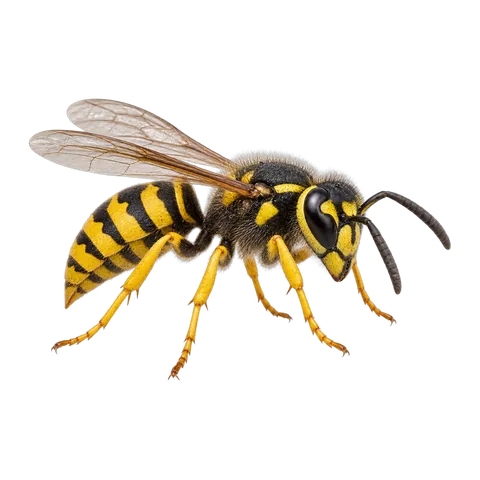
Wasp nest treatment
We treat wasp nests in lofts, eaves, walls, sheds and hedges. The nest usually dies within a day or two of treatment.
See treatment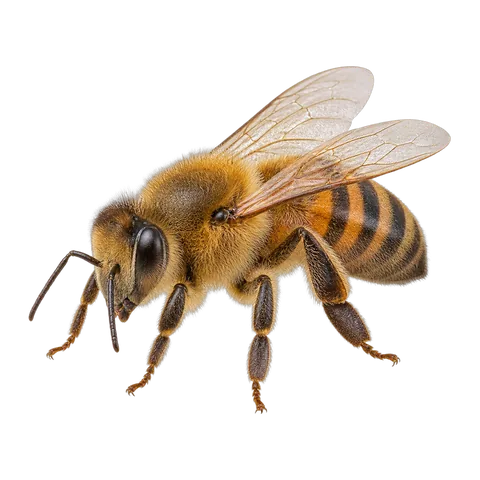
Bee swarm relocation
We do not kill honey bees. We identify the bees, pass swarms to a local beekeeper and advise on bumblebee and solitary bee nests, which are usually best left alone.
See treatment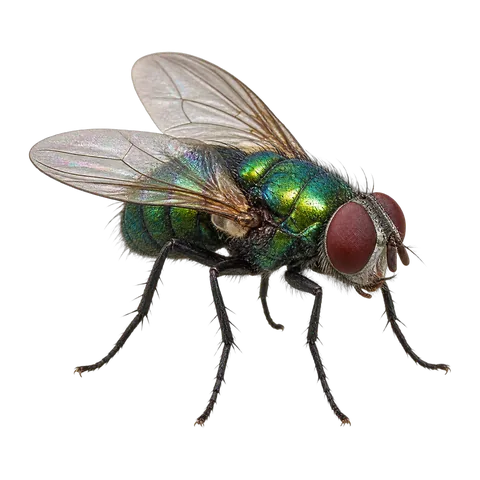
Fly control
We find out which fly you have and why it is there, then treat the source: the loft for cluster flies, the drain for drain flies, the bin store for house flies.
See treatmentWhat to do next
Get in touch
Call 07417 552257, WhatsApp a photo to 07466 976020 or fill in the form below.
Agree a price and a time
We confirm a fixed price and the first free slot, often the same day or the next.
We treat and follow up
A technician treats, proofs and comes back to check. You get written notes after each visit.
Get a quote for hornet nest treatment
Tell us what you need and where. We call back with a price and the first free slot.
- Phone07417 552257
- WhatsApp07466 976020. Send photos for a faster price.
- Emailenquiries@envexa.example
- Phone lines7am to 10pm, 7 days a week
- Visits7am to 8pm, 7 days a week