Phone lines open 7am to 10pm, 7 days a week

Pest identification guide

Not sure what you have found? Match it here. Many of these are harmless, and the guide says when to leave them alone.

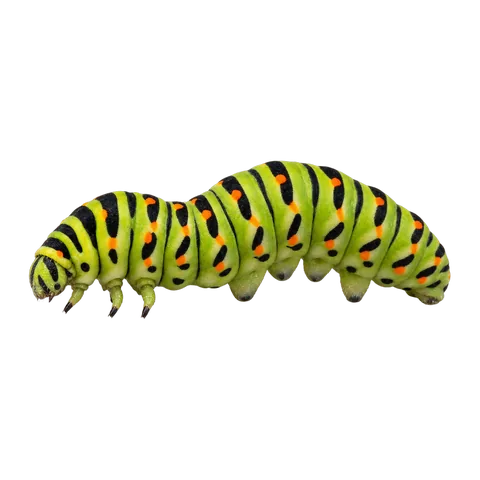
Box tree caterpillar

What it looks like
Green-yellow caterpillars with black and white stripes and a black head, up to 4 cm long. The adult moth is white with a brown border to its wings.
Where you find it
On box hedges and topiary, mostly in southern and central England, and spreading. Caterpillars feed from spring to autumn and spin webbing inside the plant.
Is it harmful?
They are harmless to people and pets, but they can strip a box plant of its leaves in a few weeks.
What to do
Check inside the plant for webbing and green droppings, pick off or hose out the caterpillars, and use pheromone traps to monitor the moths. A professional spray can control a larger outbreak.
More about box tree caterpillar

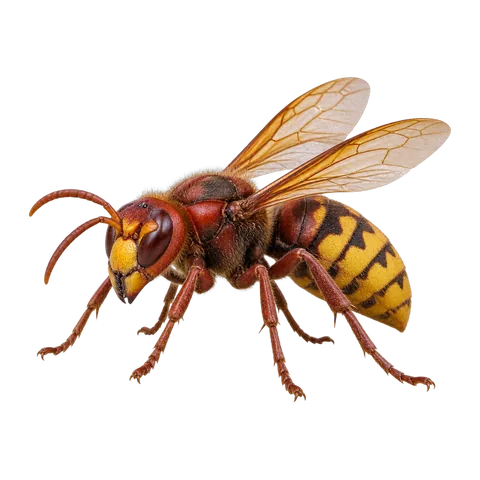
Asian hornet

What it looks like
Smaller and darker than the native European hornet, with a mostly black body, one wide yellow-orange band near the tail and yellow tips to the legs. Workers are up to 25 mm long.
Where you find it
Most UK sightings are in the south and south east of England, especially Kent. Small nests are built in sheds and bushes in spring, and larger ones high in trees from summer.
Is it harmful?
Its sting is similar to that of other hornets and wasps. It is an invasive species that preys on honey bees and other insects.
What to do
Do not disturb a nest or try to kill the hornets yourself. Report any sighting, with a photo if you can take one safely, to the Non-Native Species Secretariat through the Asian Hornet Watch app or its online form.
More about asian hornet

Bumblebees

What it looks like
Round, furry bees 10 to 25 mm long, usually black with yellow, white or orange bands. The tree bumblebee has a ginger thorax, a black body and a white tail.
Where you find it
Nests in bird boxes, compost heaps, under sheds and decking, and in old mouse holes from spring to summer. A nest lasts a few months and dies out by late summer.
Is it harmful?
Bumblebees are gentle and rarely sting unless the nest is disturbed. They are important pollinators, and several species are in decline.
What to do
Leave the nest alone if you can, as it will end on its own. We do not kill bumblebees, but we can advise on keeping people and pets away from the nest until then.
More about bumblebees

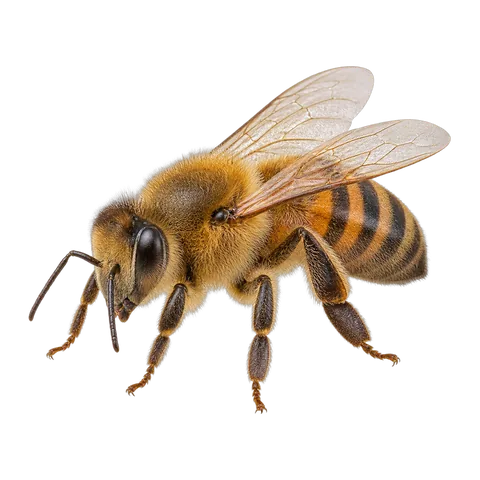
Honey bee swarm

What it looks like
A cluster of thousands of brown bees hanging from a branch, fence or wall, often the size of a football. A single honey bee is slim, 12 to 15 mm long, and golden brown with darker bands.
Where you find it
Swarms appear on warm days from May to July, when a colony splits and the old queen leaves with half the bees. They often rest for a few hours or days before moving to a new home.
Is it harmful?
Swarming bees have no nest to defend and are usually calm. Keep people and pets back, and do not spray or throw water at them.
What to do
Contact a local beekeeper who collects swarms; the British Beekeepers Association lists swarm collectors on its website. We do not kill honey bees.
More about honey bee swarm

Masonry bees

What it looks like
Small, solitary bees 8 to 14 mm long, often ginger-brown and furry. The hairy-footed flower bee is similar but black or brown, with a fast, darting flight.
Where you find it
In soft or crumbling mortar on sunny, south-facing walls, from March to June. Each female digs her own small hole, so one wall can have dozens.
Is it harmful?
They are harmless and rarely sting. They use mortar that is already weak and only make damage worse where the mortar is failing.
What to do
No treatment is needed. Young bees stay inside the wall until the next spring, so put up a bee hotel nearby first, then have damaged mortar repointed in stages.
More about masonry bees

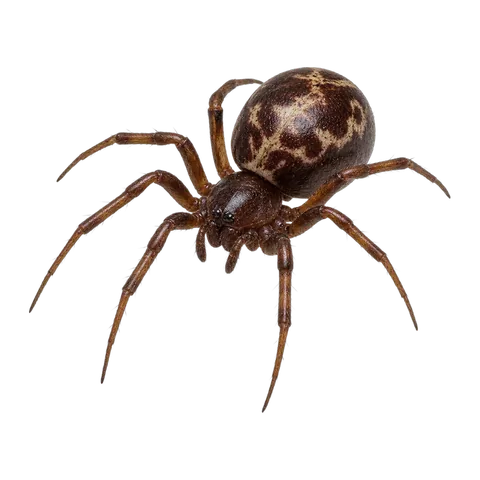
False widow spider

What it looks like
A dark brown spider with a round, shiny body 7 to 14 mm long, cream markings on the abdomen and reddish-brown legs. The most common UK species is the noble false widow.
Where you find it
In and around homes across southern England and spreading north, in window frames, sheds, garages and behind furniture. They live all year and are seen more often in autumn.
Is it harmful?
Bites are rare and usually feel like a bee sting, with pain and swelling. Get medical advice if a bite becomes very swollen, red or hot, as it may be infected.
What to do
Remove webs and spiders with a vacuum, clear clutter and seal gaps around windows. A professional treatment helps where there are many in one place.
More about false widow spider

Cluster flies

What it looks like
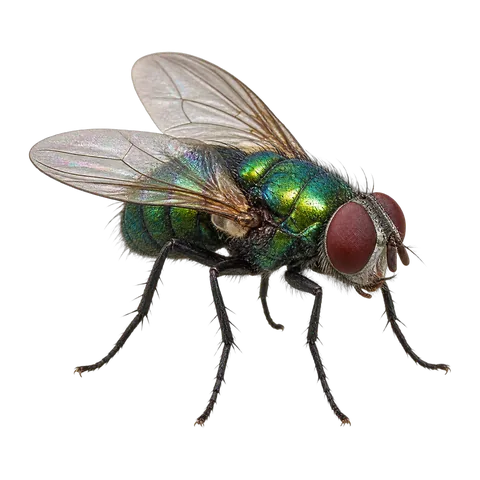
Slightly larger than a house fly, 8 to 10 mm long, dark grey with golden hairs on the thorax. At rest the wings fold flat, one over the other.
Where you find it
They gather in lofts, upper rooms and window frames in autumn to spend the winter, and come out on warm days in winter and spring. The same buildings often get them every year.
Is it harmful?
They do not breed indoors or feed on your food, so they are a nuisance more than a health risk. Large numbers can leave stains and a sweet smell.
What to do
Vacuum up clusters and seal gaps around windows, eaves and roof tiles. A loft treatment in early autumn stops large numbers settling.
More about cluster flies

Carpet moths

What it looks like
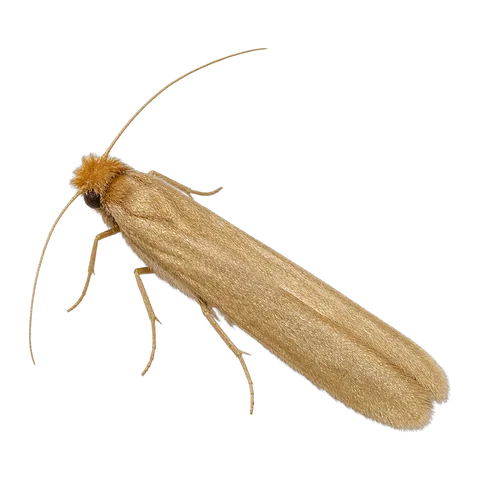
Small moths 6 to 8 mm long, golden-buff or buff with faint dark spots, that flutter low and often scuttle away from light. The larvae are creamy-white, about 1 cm long, and leave silk tubes or cases.
Where you find it
At the edges of wool carpets, under beds and sofas, and in dark wardrobes where fabrics are left undisturbed. In heated homes they breed all year.
Is it harmful?
They do not bite or carry disease, but the larvae eat wool, silk, fur and feathers and leave bare patches.
What to do
Vacuum carpet edges and under furniture often, wash or freeze affected items, and use pheromone traps to check numbers. A professional spray treats the carpets and voids where larvae live.
More about carpet moths

Carpet beetles

What it looks like
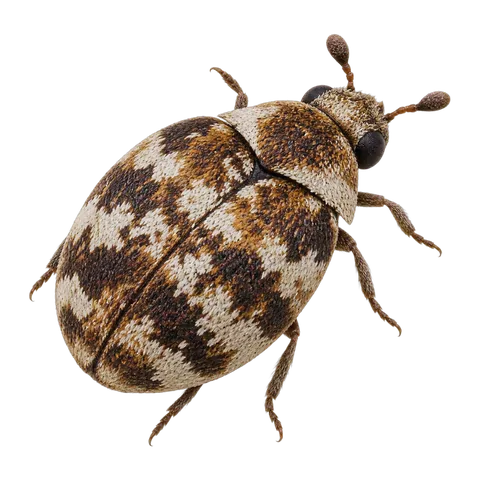
Adults are round beetles 2 to 4 mm long, mottled brown, white and yellow. The larvae, often called woolly bears, are 4 to 5 mm long, brown and covered in hairs.
Where you find it
Adults are seen on windowsills from spring to summer. Larvae live in carpet edges, airing cupboards, lofts, under floorboards and in old bird nests.
Is it harmful?
The larvae eat wool, fur, feathers and other natural fibres. Their hairs can cause an itchy rash in some people.
What to do
Vacuum carpet edges, airing cupboards and lofts, and remove old, unused bird nests from the roof space. A professional insecticide treatment deals with ongoing damage.

More about carpet beetles

Scratching noises in the loft

What it looks like
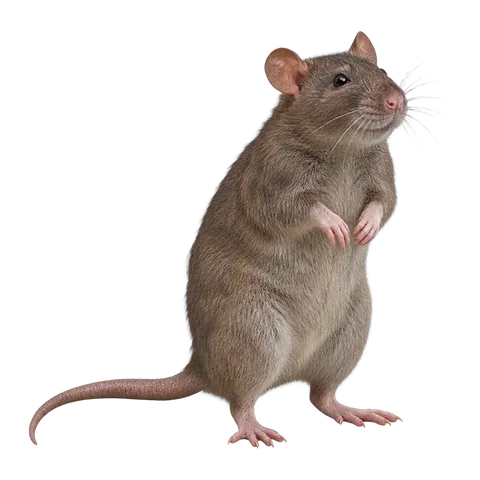
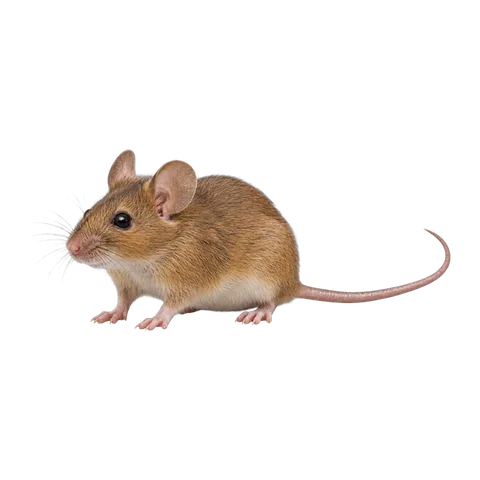
Scratching or scurrying at night usually means rats or mice, and heavier running at dawn and dusk often means grey squirrels. Droppings help: mouse droppings are 3 to 6 mm long, rat droppings 10 to 14 mm.
Where you find it
In lofts, eaves and ceiling voids, most often from autumn to spring when animals move indoors. In and around the Chilterns, loud noises from June to October may be edible dormice (glis glis).
Is it harmful?
Rats, mice and squirrels chew wiring, pipes and insulation, which can cause fires and leaks. Rats and mice also spread bacteria through their droppings and urine.
What to do
Look for droppings and gnawing, and book an inspection to confirm which animal it is. Edible dormice can only be controlled under a licence, and bats and their roosts are protected by law, so they must not be disturbed.
More about scratching noises in the loft

Cockchafers (may bugs)

What it looks like
Large, clumsy beetles 25 to 30 mm long, with reddish-brown wing cases, a dark head and thorax, and fan-shaped antennae. White triangles run along the sides of the body.
Where you find it
They fly at dusk in May and June and are drawn to lit windows, often bumping into the glass. The larvae live in soil for three to four years before they become adults.
Is it harmful?
They do not bite or sting and are harmless to people. The grubs feed on plant roots and can damage lawns.
What to do
No treatment is needed for the beetles. Close windows or turn off lights in the evening, and put any that get in back outside.
More about cockchafers (may bugs)

Booklice

What it looks like
Tiny, soft-bodied insects 1 to 2 mm long, pale grey or cream and almost see-through. Most are wingless and they move in quick, short bursts.
Where you find it
In damp, warm rooms where mould grows, such as new-build homes, kitchens, bathrooms and stores of books or paper. They also live in dry foods such as flour and cereals that have got damp.
Is it harmful?
They do not bite, sting or spread disease. They are a sign of damp and can spoil stored food.
What to do
Lower the humidity with ventilation, heating or a dehumidifier, and throw away affected food. They usually go once the area is dry, so treatment is rarely needed.
More about booklice

Crane flies (daddy long legs)

What it looks like
Thin, grey-brown flies with a body 15 to 30 mm long, narrow wings and very long legs that break off easily.
Where you find it
Large numbers hatch from lawns and grassland in late summer and early autumn, and many fly into homes towards lights.
Is it harmful?
They cannot bite or sting, and the idea that they are venomous is a myth. Their larvae, called leatherjackets, can damage lawns.
What to do
No treatment is needed. Put them outside, and close windows or use screens on late summer evenings.
More about crane flies (daddy long legs)

Bird mites

What it looks like
Tiny mites under 1 mm long with eight legs, pale grey or white, turning reddish after they feed. They often look like moving specks on walls, ceilings or bedding.
Where you find it
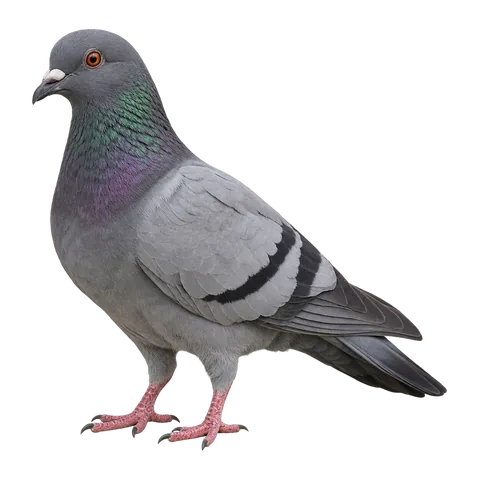
They come from the nests of pigeons, starlings and sparrows in roofs, eaves and air vents. They move into rooms in spring and early summer, often after the young birds leave the nest.
Is it harmful?
They bite people and leave itchy red marks, but they cannot breed on humans and die within a few weeks without birds.
What to do
Remove the nest once it is no longer in use, as active nests of wild birds are protected by law. The area is then treated and the entry point proofed to keep birds out.
More about bird mites

Deathwatch beetle

What it looks like
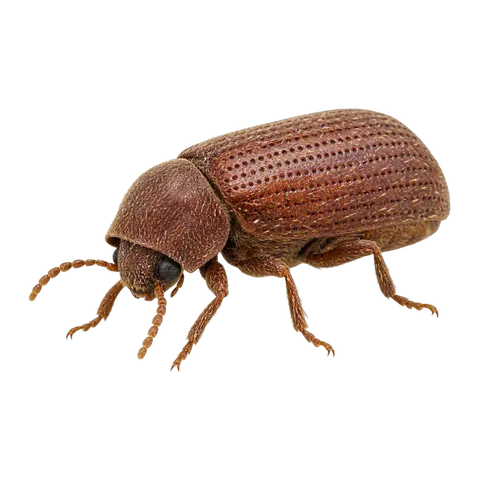
A chocolate-brown beetle 6 to 9 mm long with patches of yellowish hair that give it a mottled look. Exit holes in the timber are round and about 3 mm across.
Where you find it
In old hardwood timbers, mostly oak, in historic buildings, churches and old houses, especially where the wood is damp or decayed. Adults tap on the wood from April to June to find a mate.
Is it harmful?
They are harmless to people, but the larvae tunnel through structural timbers for years and can weaken them.
What to do
Have a timber survey done to find out whether the attack is active and how far it has spread. Treatment usually means fixing damp as well as treating the timber.
More about deathwatch beetle

Pantry moths

What it looks like
The Indian meal moth is 8 to 10 mm long with two-tone wings, pale cream near the body and copper-brown towards the tips. The larvae are off-white with a brown head and leave silk webbing in food.
Where you find it
In kitchen cupboards and food stores, in flour, cereals, nuts, dried fruit, pet food and bird seed. In a warm kitchen they breed all year.
Is it harmful?
They are not dangerous, but they spoil food with webbing, droppings and larvae.
What to do
Throw away infested food, vacuum and wipe the cupboards, and keep dry food in sealed containers. Pheromone traps show whether moths are still about.
More about pantry moths

Woodlice

What it looks like
Grey or brown animals 10 to 15 mm long with a segmented shell and 14 legs. Some kinds, known as pill woodlice, roll into a ball.
Where you find it
Under pots, logs, stones and leaf litter, and indoors in damp spots near doors, skirting boards and bathrooms. They are most active at night.
Is it harmful?
They are harmless and do not damage sound wood or furniture. Large numbers indoors usually point to damp.
What to do
Fix any damp, seal gaps around doors and skirting boards, and move leaves and pots away from outside walls. Treatment is rarely needed.
More about woodlice

Earwigs

What it looks like
Shiny brown insects 12 to 15 mm long with a pair of pincers at the tail. Males have curved pincers and females straighter ones.
Where you find it
In gardens under bark, inside flowers and in dark crevices, and sometimes indoors in summer and autumn, often in damp spots.
Is it harmful?
They can give a light nip but rarely break the skin, and they do not crawl into ears. They eat some plants but also feed on aphids.
What to do
Seal gaps around doors and windows and reduce damp indoors. Numbers indoors are usually small, so treatment is rarely needed.
More about earwigs

Plaster beetles

What it looks like
Tiny brown or black beetles 1 to 3 mm long, also called mould beetles. They are often seen walking on walls, windowsills and inside cupboards.
Where you find it
In new or freshly plastered buildings and in damp rooms where mould grows on plaster, wood or food. They are most common in the first year or two after building work.
Is it harmful?
They are harmless to people and do not damage the building. They feed on mould, so they show that a room is damp.
What to do
Dry the room with heating, ventilation and a dehumidifier, and clean off any mould. They usually go once the plaster has dried out.
More about plaster beetles

Leatherjackets and chafer grubs

What it looks like
Leatherjackets are grey-brown, legless grubs up to 3 cm long with tough skin. Chafer grubs are C-shaped and creamy-white, with a brown head and six legs near the head.
Where you find it
In lawn soil, feeding on grass roots. Damage shows as yellow or brown patches from autumn to spring, often made worse by birds, badgers or foxes digging up the turf to eat the grubs.
Is it harmful?
They are harmless to people and pets but can kill large patches of lawn.
What to do
Nematodes watered into warm, moist soil in late summer or early autumn are the main control for UK gardens, as most chemical lawn insecticides are no longer approved for home use. Feed and water the lawn so it can recover.
More about leatherjackets and chafer grubs

Bat or mouse droppings?

What it looks like
Both are small, dark and similar in size. Bat droppings crumble into a dry powder with shiny insect fragments when pressed (wear gloves), while mouse droppings are hard and do not crumble.
Where you find it
Bat droppings collect in piles below a roost or entry point, often under the roof ridge or stuck to walls, mostly from spring to autumn. Mouse droppings are scattered along walls, in cupboards and near food.
Is it harmful?
Bat droppings carry little risk, though you should wear gloves and avoid breathing in the dust. Mouse droppings and urine can spread bacteria such as salmonella onto food and surfaces.
What to do
If you think you have bats, do not block their access or disturb them, as all UK bats and their roosts are protected by law; the Bat Conservation Trust can advise. If the droppings are from mice, book a treatment.
More about bat or mouse droppings?

Book a pest control visit

Free quote, no call-out charge. Lines open 7am to 10pm, 7 days a week.

CallWhatsAppQuote
WhatsApp us

How would you like to reach us?

WhatsApp is the quickest way to get a price: send a photo and your postcode. Prefer to talk or fill in a form? That works too.