
Feral pigeons
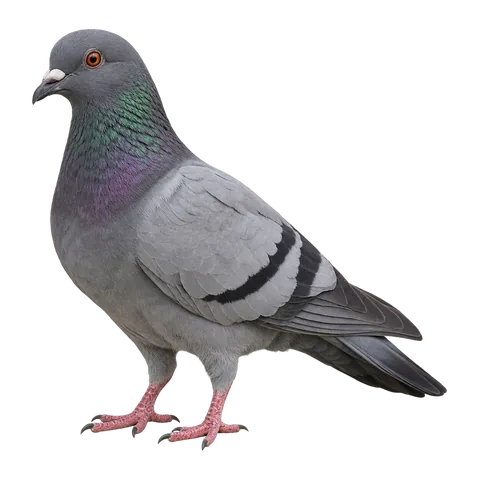
The feral pigeon is the pigeon of town centres, stations and high streets. It comes from the wild rock dove, which nests on sea cliffs, and that is why ledges, roofs and the undersides of bridges suit it so well. Most feral pigeons are blue-grey with two dark bars across each wing and a shiny green and purple neck, but there are many colour forms, from almost white to brown and nearly black.
Woodpigeons and collared doves
Two other birds are often called pigeons. The woodpigeon is larger and heavier, grey with a pinkish chest, a white patch on each side of the neck and white bars across the wings that show in flight. It lives in gardens, parks and farmland and nests in trees and hedges.
The collared dove is smaller and slimmer, pale sandy grey with a thin black half-collar on the back of the neck. It nests in garden trees and sometimes on brackets and satellite dishes. Both birds feed in gardens and on crops, but they rarely gather on buildings in large numbers the way feral pigeons do.
Nesting and breeding
Feral pigeons can breed in any month. A pair builds a loose, flat nest of twigs, often on top of old droppings, and the female lays two white eggs. Both parents sit on the eggs for around two and a half weeks and feed the young for about a month. The pair may start new eggs before the first young have left, so one pair can raise several broods a year.
Pigeons are loyal to a site and return to the same ledges and roofs for years. Favourite nesting spots include:
- Ledges, window sills and the tops of columns and signs.
- The gap under solar panels, which gives shelter from wind and rain.
- Roof voids reached through broken tiles or open vents.
- Railway arches, canopies and the undersides of bridges.
- Balconies, especially ones that are not used often.
Droppings, damage and health
A roost of pigeons produces a lot of droppings. They make paths and steps slippery, block gutters and drains, stain stonework, cars and paintwork and wear away soft stone over time. Old nests and droppings in gutters and roof spaces can lead to leaks and damp.
Dried droppings can carry bacteria and fungi, and breathing in the dust can make people ill, so they should be dampened and cleared in protective kit. Nests can also bring bird mites and fleas into a building, and these sometimes bite people indoors once the birds have gone.
What the law allows
Pigeons, their eggs and their active nests are protected under the Wildlife and Countryside Act 1981. Our work on pigeons is proofing and deterrence, which keeps the birds off the building. Where there is an active nest with eggs or young, work on that spot waits until the young have left. Feeding pigeons keeps them in an area, so it helps if neighbours and visitors stop putting food down.
When to call a professional
A pigeon or two visiting the garden is rarely a problem. Birds roosting on the roof every night, nests under solar panels or droppings building up on a balcony usually need proofing, as pigeons seldom give up a good site on their own. We survey where they land and nest, clear away droppings and old nests, and fit netting, spikes or wire to suit the building. A photo on WhatsApp of where the birds sit helps us give you a quote.