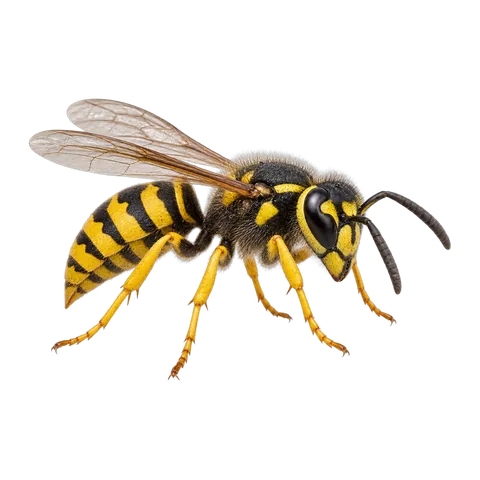
Spring: queens and new nests
Queen wasps wake from hibernation in spring, often on the first warm days of April. Each queen looks for a sheltered place to build, such as a loft, shed, garage, wall cavity, hedge or an old burrow in the ground. She starts with a papery nest about the size of a walnut, lays the first eggs and raises the first workers on her own.
This is the easiest time to deal with a nest, because it holds only the queen and a few young.
Early summer: nests grow quickly
From June, the workers take over building and feeding, and the queen stays inside laying eggs. The nest grows fast, and by late summer a large one can hold several thousand wasps. In these weeks workers hunt insects to feed the larvae, so they take less interest in people and food.
Late summer: wasps around food
In August and September the nest raises new queens and males, and the workers have fewer larvae to feed. They go looking for sugar and are drawn to drinks, fruit, bins and picnics, which is when most people get stung. Nests are at their largest and most defensive, so this is the riskiest time to be near one.
Autumn: nests die out
By October most nests are dying. The old queen dies, the workers die off as it gets colder, and the new queens leave to mate and hibernate in sheds, lofts and woodpiles. Old nests are not reused, though a new queen may build close by the next spring.
Fewer stings and smaller nests
A few habits make a difference through the season:
- Check sheds, lofts, eaves and garages in late April and May, while any nest is still small.
- Keep bin lids shut, and cover sweet drinks and food outdoors.
- Do not swat at wasps, as this makes them more likely to sting.
- Never block or spray into a nest entrance yourself.
- Look before you trim hedges or move stored items in a shed in summer.
- If you think you have seen an Asian hornet, report it through the Asian Hornet Watch app.
When to call a professional
A nest away from the house, in a hedge or tree at the end of the garden, can often be left until it dies out in autumn. If a nest is in the loft, near a door or path, or where children play, treatment is the safer choice. If the nest is still active 7 days after treatment, the return visit is free, and we can tell from a photo if they are wasps or bees.