Garden ants and Pharaoh ants
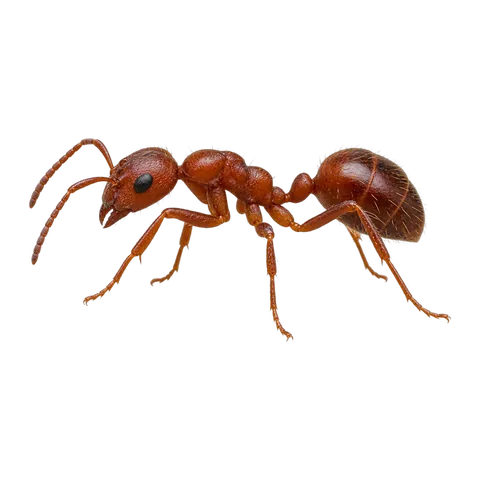
Most ants in UK kitchens are black garden ants. They nest outside, under paving, in lawns or in the soil beneath the house, and send workers indoors to collect food. They are dark brown to black, about 3 to 5 mm long, and most active from spring to autumn.
Pharaoh ants are a different problem. They are tiny, pale yellow to light brown, and live indoors all year in heated buildings such as blocks of flats, hospitals and hotels. They nest in wall voids and behind kitchen units, and colonies split into new nests when disturbed. If you see very small, pale ants in winter, treat them as Pharaoh ants until you know otherwise.
How the trail works
A garden ant that finds sugar, jam, pet food or a sticky spill lays a scent trail on its way back to the nest. Other workers follow it, and within a day you can have a steady line of ants from a gap by the back door to the crumbs under the toaster.
Watch the trail for a few minutes to see where it starts. Common entry points are gaps under door thresholds, cracks where the kitchen floor meets the wall, the edges of window frames and holes around pipes under the sink.
Breaking the trail
- Wipe the trail and the area around it with hot soapy water or a mild detergent to remove the scent.
- Clean up the food source: wipe worktops, sweep under appliances and rinse sticky jars and bottles.
- Keep sugar, honey, syrup and cereals in sealed containers, and do not leave pet food down all day.
- Seal the crack or gap the ants use with a suitable filler or sealant once the trail has gone.
- Empty kitchen bins and recycling often, and rinse food tins before they go in.
Bait or spray
Sprays kill the ants you can see, but the nest keeps sending more. Ant bait works differently: workers carry it back and share it with the colony, including the queen, and the trail stops over the following days. You may see more ants around the bait at first, which means it is being taken.
Leave bait points alone and do not clean around them while they work. With Pharaoh ants, avoid sprays altogether, as they can make the colony split and spread to new rooms or flats.
When to call a professional
Call a professional if ants keep coming back after you have cleaned and sealed, if the trail comes from inside a wall or under the floor, or if you think you have Pharaoh ants. In a shared building, Pharaoh ants usually need treatment across several flats at once to clear them.
A technician can identify the species, place bait where children and pets cannot reach it and tell you which gaps to seal. Quotes are free, with no call-out charge, and we aim to visit the same or next day. If the ants return within 90 days of the last treatment, we come back free. A clear photo of one ant next to a coin, sent on WhatsApp, is often enough for us to tell you which species it is.