What flying ant day is
Flying ant day is the name for the summer days when large numbers of winged ants leave their nests at once. Most are black garden ants. The winged ants are young queens and males leaving the nest to mate.
It is not one single day across the country. Nests in an area tend to release winged ants on the same warm, humid days, usually in July or August, and different parts of the UK see swarms on different days over several weeks.
What happens to the ants
The ants mate in flight. The males die soon afterwards. Mated queens land, break off their wings and look for a sheltered spot in soil, under paving or at the base of a wall to start a new nest.
Many are eaten by birds such as gulls and swifts, and most queens never manage to start a nest. The swarm is usually over in a day or two, and the ground may be covered in shed wings afterwards.
Harm to people and homes
Black garden ants do not sting, and winged ants do no damage to the house. They are a nuisance on patios, washing lines and windows for a short time. They are drawn to light, so they may gather around windows and doors in the evening.
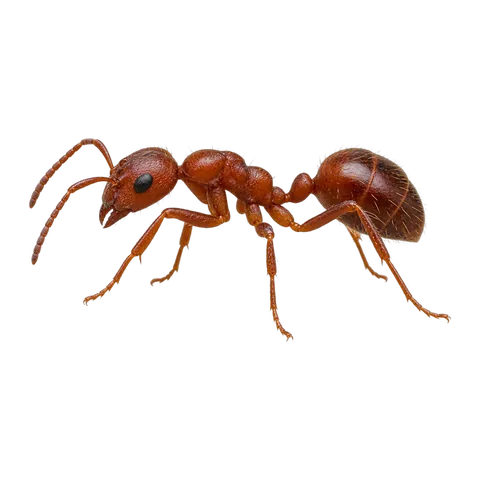
Winged ants are sometimes mistaken for termites or small wasps. Ants have a narrow waist, bent antennae and front wings longer than the back pair. The UK has no widespread termite problem, so a swarm in a British garden is almost always ants.
Cases where you should act
In most cases there is nothing to do. Close windows and doors while the swarm is on, and vacuum or sweep up any that get inside.
It is different if winged ants come out from inside the house, for example from gaps in the floor, skirting boards or around a fireplace. That means there is a nest under the floor or in a wall, and it is likely to send worker ants into the kitchen as well.
Ants in the house
- Wipe up sugary spills and crumbs, and keep sweet foods in sealed containers.
- Follow the trail of worker ants to find where they are getting in.
- Seal gaps around door frames, skirting boards and pipes with filler or sealant.
- Put ant bait stations along the trail, so workers carry the bait back to the nest.
- Avoid spraying the trail, as it kills the workers you can see and leaves the nest untouched.
When to call a professional
Call a professional if ants keep coming into the kitchen after a few weeks of baiting, if winged ants are coming from inside the house, or if you cannot find where they are getting in. A technician can trace the nest and treat it directly.
Send a photo on WhatsApp and we can tell you what kind of ant it is. Quotes are free and there is no call-out charge, and we aim to visit on the same or next day.