Why they are in the news each autumn
The noble false widow is the false widow most people mean. It came to the UK from the Canary Islands and Madeira and has lived here for more than a century, mostly in southern England. It has spread north and inland in recent decades and is now common around houses in many towns.
Sightings go up in late summer and autumn. Adult males leave their webs to look for females, so they turn up on walls, floors and in sheds, and people notice them. That timing is also when most news stories appear.
How to recognise one
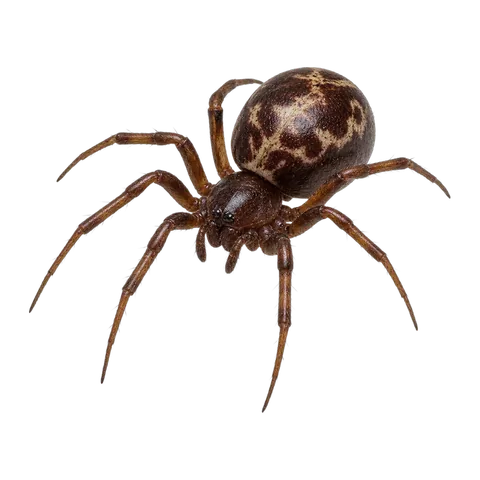
Noble false widows have a round, shiny, dark brown body about the size of a pea, with cream markings on the top of the abdomen that some people say look like a skull. The legs are reddish-brown. They are sometimes mistaken for black widows, which do not live wild in the UK and have a red hourglass mark on the underside.
They build tangled, messy webs in sheltered corners, often around window frames, door frames, fences, sheds and garden furniture.
What a bite is like
False widows are not aggressive and bites are rare. Most happen when a spider is trapped against the skin, in clothing, bedding or a glove. A bite usually feels like a bee or wasp sting, with pain, redness and swelling around the spot for a day or two.
Wash the area with soap and water, use a cold pack to ease swelling and take a painkiller if you need one. If the bite becomes very red, swollen or hot, if redness spreads, or if you feel unwell, call NHS 111 or speak to your GP. Some bites become infected through scratching, and that needs treatment.
Keeping numbers down around the home
False widows like quiet, sheltered spots near light, where insects gather. These steps help.
- Vacuum webs and spiders from window frames, porches and corners, and empty the vacuum outside.
- Shake out shoes, gloves and clothes left in sheds or garages before you put them on.
- Clear clutter from sheds, garages and the space around doors.
- Fill gaps around window and door frames with sealant.
- Turn off outside lights when you do not need them, as they draw in the insects spiders eat.
- Check children's play equipment and garden furniture that has been stored for a while.
Spiders worth leaving alone
Most UK spiders are harmless and eat flies, moths and other insects. The large house spiders that run across the floor in September are also males looking for a mate, and they are not a bite risk. If a spider is not near a door, a bed or a child's room, leaving it be is fine.
When to call a professional
Call us if you are finding false widows in numbers around doors, windows or bedrooms, if someone in the house has been bitten, or if you run a school, nursery or care setting and want the outside of the building treated. We remove webs and treat the frames, ledges and gaps the spiders use.
Quotes are free and there is no call-out charge. If you are not sure what spider you have, send a photo on WhatsApp and we will tell you.