Why the difference matters
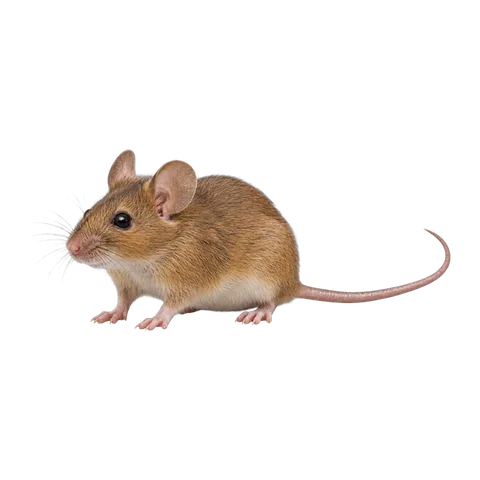
Rats and mice need different treatment. Mice usually live inside the house, nesting in wall voids, under floors and behind kitchen units. Rats often live outside or in drains and come in to feed, so the fix may involve the drains as well as the house.
Traps, bait placement and proofing also differ. A gap small enough to keep rats out can still let a mouse through, so knowing which one you have saves time and money.
Droppings
Droppings are the most reliable clue. Mouse droppings are small, about 3 to 6 mm long, with pointed ends, similar to a grain of rice. They are scattered along runs, in cupboards and on shelves, often in large numbers.
Brown rat droppings are much larger, often 1 to 2 cm long, thicker and with blunt ends. They tend to be found in groups in fewer places. Fresh droppings of either kind are dark and soft, and they turn dry and crumbly after a few days.
Sounds
Both are most active at night. Mice make light, fast scratching and scurrying sounds in ceilings, walls and behind cupboards, often in short bursts.
Rats are heavier, so the sounds are louder: thuds, scrabbling and steady gnawing, often under floors or in the loft. Noise in the loft at dawn and dusk could also be squirrels, which are active in daylight.
Damage and other signs
- Gnaw marks: mice leave small, neat holes and fine tooth marks, while rats leave larger, rougher holes and can chew through plastic pipes, wood and soft metals.
- Smear marks: rats leave dark, greasy marks along walls and around holes where their fur rubs. Mouse marks are fainter and harder to see.
- Burrows: holes roughly 6 to 9 cm across in garden soil, under sheds and decking or beside walls point to rats.
- Footprints and tail marks in dusty areas, which are larger and further apart for rats.
- Nests of shredded paper, fabric or insulation in warm, hidden places. Mice nest indoors more often than rats.
- A strong, stale smell of ammonia, which usually comes with a larger infestation of either.
What to do next
For a few mice, snap traps set against walls near the droppings can work. Seal small gaps around pipes and under doors with wire wool and filler, and keep food in sealed containers.
Rats are harder to deal with yourself. Do not leave rubbish or food out, and check drain covers, manholes and the area around the kitchen waste pipe. A broken drain is a common way into a house, and a drain survey can find it. A rat blocker is a one-way flap fitted in the drain that stops rats coming up while still letting waste flow out.
When to call a professional
Call a professional if you think you have rats, if droppings keep appearing after trapping, or if you are not sure which you have. Rats can spread disease and damage wiring and pipes, so it is worth dealing with them early.
Send us a clear photo of the droppings or damage on WhatsApp and we can usually tell you which rodent it is. Quotes are free, there is no call-out charge, and we aim to visit on the same or next day.