
Cockroach bites
Cockroaches can bite people, but it is rare. They feed on food scraps, grease and rubbish, and only nibble at people in very heavy infestations where food is short, usually at night. A bite, if it happens, is a small red mark on the hands, feet or face that can swell or become infected if scratched.
How cockroaches spread germs
The bigger health risk is contamination. Cockroaches move between drains, bins and kitchen worktops, and they carry bacteria such as salmonella and E. coli on their bodies and in their droppings. Because they hide during the day, they can leave droppings, shed skins and a musty smell on surfaces, utensils and food without anyone seeing them. Food left out overnight, dishes in the sink and pet bowls are where contamination is most likely.
Allergies and asthma
Cockroach droppings, saliva and shed skins contain proteins that can trigger allergies. In some people, children especially, they can make asthma worse. Removing the cockroaches and cleaning up droppings lowers the amount of allergen in the home over time. Allergens can stay in dust after the insects have gone, so clean kitchen floors, cupboards and the backs of appliances well once treatment is finished.
Common UK species
Three species cause most problems in UK buildings. All of them hide by day and come out at night, so seeing one in daylight usually means many more are nearby.
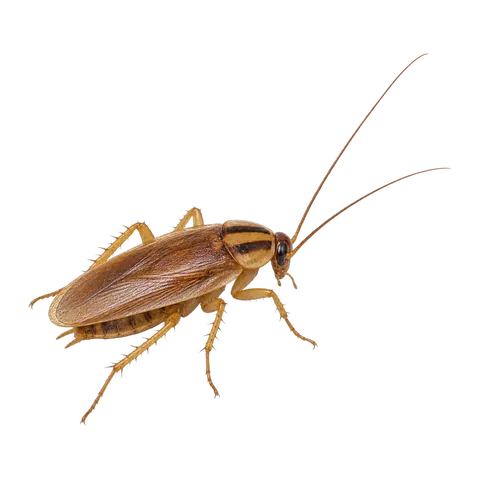
- German cockroach: light brown, about 1.5 cm long, with two dark stripes behind the head. Lives in kitchens, restaurants and warm spaces behind appliances.
- Oriental cockroach: dark brown to black, about 2.5 cm long and slower. Lives in damp places such as basements, drains and under floors.
- American cockroach: reddish-brown and larger, up to around 4 cm. Found mainly in large heated buildings and service ducts.
Lowering the risk at home
Clean up crumbs and grease every day, especially under the cooker, fridge and kettle. Keep food in sealed containers, empty the kitchen bin at night and fix dripping taps and leaks, as cockroaches need water. Seal gaps around pipes under the sink and behind the units, where cockroaches get in and hide. Check deliveries, cardboard boxes and second-hand appliances, as cockroaches and their egg cases can arrive inside them.
When to call a professional
Cockroaches breed quickly and hide deep inside units and appliances, so a few sightings usually means more than you can see. If you are seeing them regularly, a treatment with gel bait and an insect growth regulator is the most reliable way to clear them. Food businesses must keep their premises free of pests, and we can visit outside trading hours.