
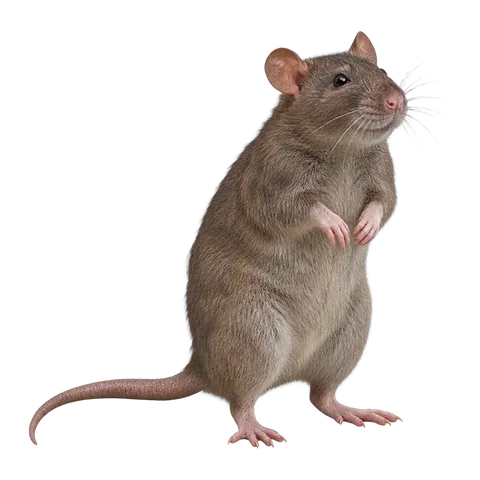
Brown rats
The brown rat, also called the common or Norway rat, is the rat found in UK homes, gardens, farms and sewers. An adult has a heavy body about 20 to 25 cm long, with a tail a little shorter than that. The fur is grey-brown on the back and paler underneath, the nose is blunt and the ears are small and covered in fine hair. A big adult can weigh around 400 to 500 g, about the same as a tin of beans.
Young brown rats are often mistaken for mice. A young rat has a bigger head and bigger feet for its size, and a thicker tail.
Black rats
The black rat, or ship rat, was once common in British ports and towns but is now very rare in the UK. It is slimmer than the brown rat, with a pointed nose, large thin ears and a tail longer than its body. Despite the name, many black rats are brown. They climb well and tend to live high up in buildings, while brown rats usually live at ground level and below. A rat found in a home today is almost certainly a brown rat.
How quickly rats breed
Brown rats breed all year where there is food and shelter. A female can breed from about three months old. She carries her young for around three weeks, has litters of six to ten and can mate again soon after giving birth. The young are born blind and hairless in a nest of shredded material and leave it at about three weeks old.
Most wild rats live for about a year, but in that time one pair can become a colony of dozens if nothing stops them. This is why a problem that starts with one or two sightings in spring can be much bigger by the end of the summer.
How rats behave
Rats live in family groups and spend most of their lives within a short distance of the nest. They come out after dark, follow the same runs along walls and fences each night and use their whiskers to keep close to edges. They are strong swimmers and good climbers, which is how they get up pipes, along cables and into lofts and wall cavities.
Brown rats are also wary of anything new in their path. A trap or bait box placed on a run may be avoided for several days until the rats get used to it. This is normal, and it is one reason a rat treatment takes more than one visit.
Health risks and damage
Rats carry bacteria and parasites in their urine, droppings and fur, and they spread them onto food, worktops and stored items as they move around. The main risks are:
- Leptospirosis, also called Weil's disease, caught from water or soil contaminated with rat urine, often through cuts or the eyes and mouth.
- Salmonella and other bacteria that cause food poisoning.
- Bites and scratches, which are rare but can become infected and need medical advice.
- Fleas and mites that rats bring into the building.
- Gnawed cables and plastic water pipes, which can lead to electrical faults, fires and leaks.
When to call a professional
If you have seen a rat outdoors once and found nothing since, keeping bins closed and food put away may be all it needs. A rat inside the house, activity in the loft or under the floor, or rats in the garden week after week usually mean a nest close by. We survey inside and out, find the way in and treat with traps or bait in locked boxes under CRRU stewardship. Quotes are free and there is no call-out charge.