
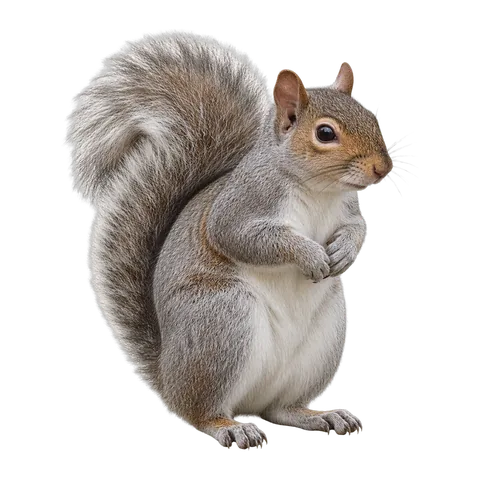
Signs of squirrels in the roof
Grey squirrels are active in daylight, so noises early in the morning and late in the afternoon often point to them. You may hear running, scratching, thumping or something rolling across the boards. In the loft, look for droppings, chewed wood and cables, and insulation pulled into a nest. Outside, watch for squirrels running along the gutter or slipping into a gap at the eaves.
How they get in
Squirrels climb walls, trees, cables and drainpipes, and they jump onto roofs from nearby branches. Once up there, they chew through soft fascia boards, rotten soffits or loose tiles to make a hole. They often use the same way in for years, and new squirrels find it once it is open. Females have young in spring and again in late summer, and a mother with a litter in the loft is more determined to stay.
The damage they cause
Squirrels gnaw constantly, and a loft gives them plenty to chew on:
- Electrical cables, which can become a fire risk.
- Rafters, joists and stored belongings.
- Loft insulation, which gets torn and soiled and then works less well.
- Water tank lids, pipes and lagging, which can lead to leaks.
- Roof timbers and soffits around the entry hole.
The law on grey squirrels
Grey squirrels are an invasive species. Once caught, they must not be released back into the wild, so catching them and letting them go in a park or wood is not allowed. Never seal a squirrel inside the loft, as it will die there or chew a new way out. Red squirrels are protected and absent from most of England, so a squirrel in a loft in the south is almost always a grey.
Proofing the roof
Cut back branches within a couple of metres of the roof. Once every squirrel is out, repair damaged fascias and soffits and cover gaps with galvanised mesh or metal sheet, as squirrels chew through plastic and soft wood. Soiled insulation may need replacing, as it can smell and attract other pests. Check the repairs from outside after a few weeks for any fresh chewing.
When to call a professional
Squirrels in a loft rarely leave on their own, and proofing only works once they are out. If you hear them most days or find chewed cables, we can confirm what it is, deal with the squirrels by legal methods and close the holes. In and around the Chilterns, loud night-time noise from June to October may be edible dormice, which can only be controlled under a licence.