
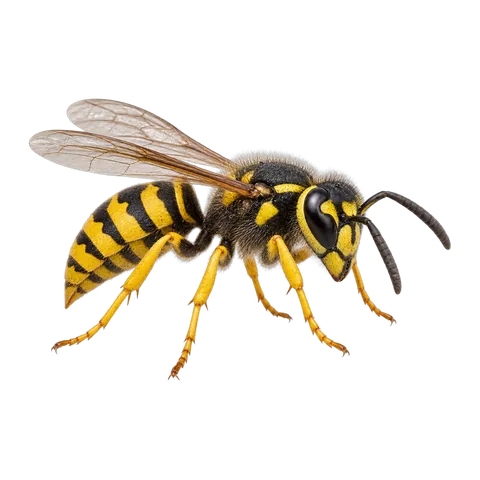
Why wasps choose lofts
Queen wasps look for a dry, sheltered space to start a nest in spring, and a loft with a small gap at the eaves or under a roof tile suits them well. The nest starts the size of a walnut and grows all summer. By late summer it can be as big as a football or larger, and many people only notice it when wasps are seen flying in and out of one spot on the roofline.
Signs of a nest in the roof
You may notice one or more of these:
- A steady line of wasps flying in and out of the same gap in the eaves, soffit or roof tiles.
- Wasps in upstairs rooms, often near light fittings or the loft hatch.
- A papery, grey-brown ball fixed to rafters, the underside of the roof or stored boxes.
- A faint crackling or rustling from the ceiling on a still day, the sound of wasps chewing.
Staying safe
Stay out of the loft, especially from midsummer onwards, when the colony is at its largest and most defensive. Do not block the entry hole, as the wasps may chew through the ceiling and come into the house. Keep the loft hatch shut, and keep children and pets out of rooms where wasps are getting in. Do not spray the nest with a shop-bought product, as a partly treated nest can make the wasps more aggressive.
If someone is allergic
Anyone with a known allergy to stings should keep well away from the nest and carry their prescribed medicine. Call 999 if someone has trouble breathing, swelling of the face or throat, or feels faint after a sting. For everyone else, wash a sting with soap and water, hold something cold on it and take an antihistamine if it itches.
Treatment and the old nest
We puff insecticide dust into the entrance, using an extension pole if it is high on the roof. Wasps keep flying in for a day or two, pick up the dust and die, and the nest usually dies within that time. Old nests are not reused, so a dead nest can stay where it is or be removed if you prefer. In autumn colonies die out on their own and the new queens leave to hibernate, so a nest found in November may already be empty.
When to call a professional
A nest in the loft is close to living space and hard to reach safely, so most people have it treated. If the nest is still active 7 days after treatment, we come back free. Send us a photo on WhatsApp if you are not sure whether they are wasps, bees or hornets, as we do not destroy honey bees or bumblebees.