What the tapping is
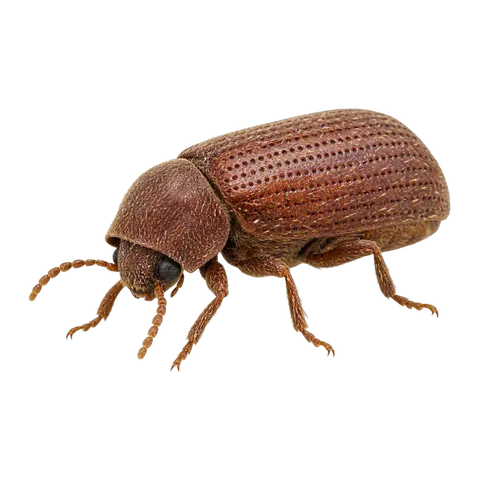
Adult deathwatch beetles knock their heads against the wood to find a mate. The sound is a short run of soft, quick taps, then a pause, and it often gets an answer from another beetle nearby. You are most likely to hear it on quiet evenings from April to June, when the adults come out of the timber.
The name comes from old stories about the sound being heard by people sitting up with the dying in quiet houses. In practice it means only that adult beetles are present and the timber has been under attack for some years.
Where deathwatch beetle lives
Deathwatch beetle is mostly found in old hardwood, oak above all, in churches, historic buildings and older houses with exposed beams. It prefers timber that is damp and has some fungal decay. Dry, sound softwood in a modern house is rarely affected.
The larvae spend years inside the wood, often five years or more, and the adults do not fly much. So an attack tends to stay in the same timbers and spread slowly, usually where a roof or wall has let in water.
Other causes of tapping
Most tapping in a house is not beetles. Before you worry, rule out the common causes.
- Heating pipes ticking as they warm up and cool down, often at the same times each day.
- Timber floors and roof joists creaking as the temperature changes overnight.
- Mice or rats moving in the ceiling or under the floor, which sounds more like scratching or running.
- Birds on the roof or in the gutters, mostly in the early morning.
- A loose cable, aerial or downpipe knocking in the wind.
Holes, dust and other signs
Deathwatch beetle leaves round exit holes about 3 mm across, larger than the 1 to 2 mm holes of common furniture beetle. Fresh holes have clean, pale edges. The bore dust, called frass, is gritty and made of small bun-shaped pellets you can see with a magnifying glass.
Small piles of dust under a beam in late spring, dead beetles on windowsills near the timber, and holes in places that were recently painted or cleaned all point to an active attack. Dark, dusty holes on their own may be very old.
What to do now
Find and fix any damp first. A leaking roof, blocked gutter, failed lead flashing or wall built into the end of a beam keeps the wood wet, and that is what keeps the beetles going. Drying the timber slows them a great deal.
Do not cut out or replace beams on the strength of a few holes. Some damage may be centuries old, and structural timbers need a proper look before anyone decides what to do. Winter is a good time to have a survey done, so any treatment can be in place before the adults come out in spring.
When to call a professional
Ask for a timber survey if you hear tapping in spring, find fresh holes or dust, or have bought an older property with exposed oak. We can check whether the attack is still active, how far it has spread and whether treatment is needed at all. Where beams carry a load and show heavy damage, we will tell you to have a surveyor or structural engineer look at them.
Bats roost in many old roofs and are protected by law, so we check lofts before any treatment and stop to get advice if bats are present. Quotes are free and there is no call-out charge.