How wasps end up underground
Common wasps and German wasps often nest in the ground. A queen picks an old mouse or vole burrow, a gap under paving, a hollow under a tree root or a soft bank. She builds a small papery nest, and the workers enlarge the hole as the colony grows through summer.
Ground nests are easy to miss. The only sign is often a steady stream of wasps flying low into one small hole. Many people find them only when a mower, strimmer or dog gets close.
Wasps, bees or something else
Before deciding what to do, watch the hole from a safe distance for a minute or two.
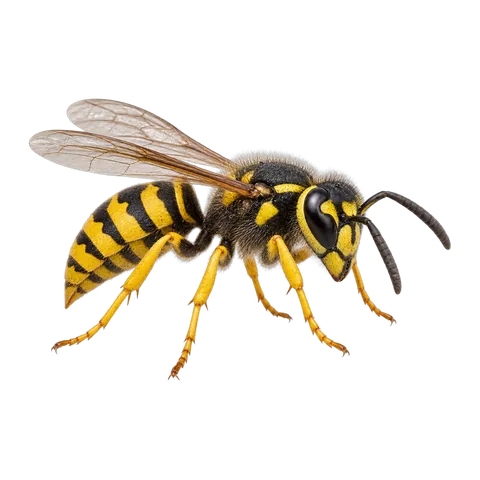
- Wasps are smooth, shiny, bright yellow and black, and fly fast and straight into the hole.
- Bumblebees are round and furry and also nest in old burrows. They are not treated, so look closely.
- Mining bees make many small holes with little mounds of soil in spring, not one busy entrance in late summer.
- Dozens of wasps on the ground with no hole may be feeding on fallen fruit or a spill.
What not to do
Pouring boiling water, petrol, bleach or other liquids into the hole is dangerous and often fails. The nest can be deep and wide, the liquid rarely reaches it all, and the wasps that survive come out angry. Petrol can also poison soil and catch fire.
Do not block the hole with soil, a brick or a bucket. The wasps will dig another way out, sometimes under a nearby wall or into a shed. Avoid shop-bought sprays at the entrance too, as they tend to stir up the nest without killing it.
Keeping everyone safe until it is treated
Mark the spot with a cane or a garden chair so nobody walks or mows over it. Keep children and pets away, and keep the mower and strimmer well clear, as the vibration sets wasps off. If the nest is near a path, use another route for a few days.
Anyone who has had a bad reaction to a sting before should stay well away. If someone is stung and has trouble breathing, swelling of the face or throat, or feels faint, call 999.
How a ground nest is treated
A technician puts an insecticide dust into the entrance. Returning wasps carry it inside, and the nest usually dies within a day or two. Keep children and pets away from the area for the rest of the day. There is no need to dig the nest out afterwards; it breaks down in the soil.
If you would prefer to wait, a wasp nest dies on its own in autumn and is not reused. That only makes sense if the nest is somewhere nobody goes.
When to call a professional
Call us if the nest is in a lawn, play area or path you use, or if you are not sure what is going in and out of the hole. A photo or short video on WhatsApp helps us tell wasps from bees.
Quotes are free, with no call-out charge, and we aim to visit the same or next day. If wasps are still active seven days after our treatment, we come back for free.