What you are looking at
A swarm is a large cluster of honey bees, often hanging from a branch, fence post, hedge or wall like a brown, moving ball. It forms when a colony grows too big and the old queen leaves with part of the colony to find a new home. Swarms are most common on warm days between May and July.
Bees in a swarm have no nest, honey or young to defend, so they are usually calm. They rest while scout bees search for a new site, which can take a few hours or a few days.
The first hour
These steps keep everyone safe while you arrange collection.
- Keep people and pets at least a few metres back, and bring children indoors if the swarm is near where they play.
- Close nearby windows and doors so scout bees do not explore the house.
- Do not spray the bees with water, insecticide or anything else, and do not try to knock them down.
- Take a photo from a safe distance. It helps a beekeeper decide whether they can reach the swarm.
- Note how high up the swarm is and what it is hanging from.
Is it honey bees
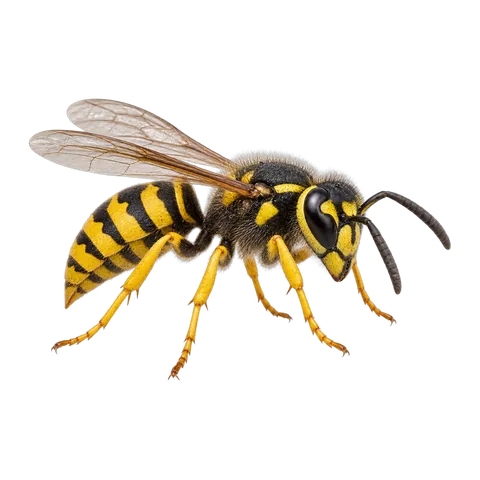
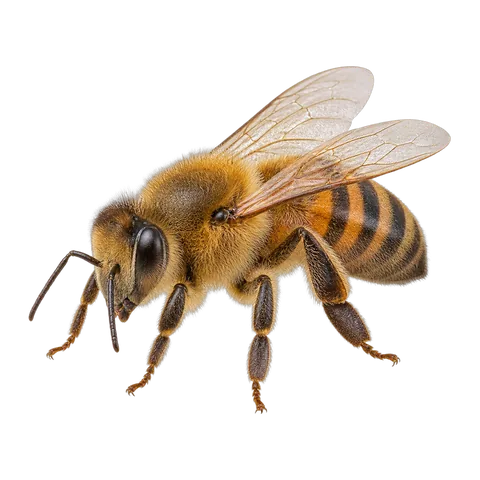
Honey bees are slim, golden brown and about the size of a wasp, but with a fuzzier body and darker bands. Bumblebees are rounder and furrier and do not swarm. Wasps are bright yellow and black and shiny. Beekeepers collect honey bee swarms only, so check before you call. If you are unsure, a clear photo usually settles it.
Getting the swarm collected
Many local beekeepers collect swarms, and the British Beekeepers Association lists swarm collectors on its website by postcode. Contact one as soon as you can, because the swarm may leave once the scouts find a new site.
Tell the beekeeper where the swarm is, how high it is, how long it has been there and whether there is easy access. A swarm low on a shrub can often be shaken into a box in minutes. One high in a tree may be out of reach, and the beekeeper may advise you to wait for it to move on.
If the bees move into a building
Sometimes a swarm skips the resting stage, or finishes it by moving into a chimney, wall cavity, roof space or air brick. Once the bees start building comb, they are an established colony and much harder to move.
Removing a colony from a wall or chimney often needs a beekeeper and a builder working together to open up the space, take out the comb and close the gap. Leaving honey comb inside a wall can attract other insects and stain plaster, so it is worth getting advice early.
When to call a professional
We do not kill honey bees. If you cannot tell what you have, or bees are going into your roof or chimney, send us a photo on WhatsApp. We will identify the bees, put you in touch with a local beekeeper for a swarm and advise on how to arrange the removal of a colony from a building.
Our advice is free, and so are our quotes.