What masonry bees do to a wall
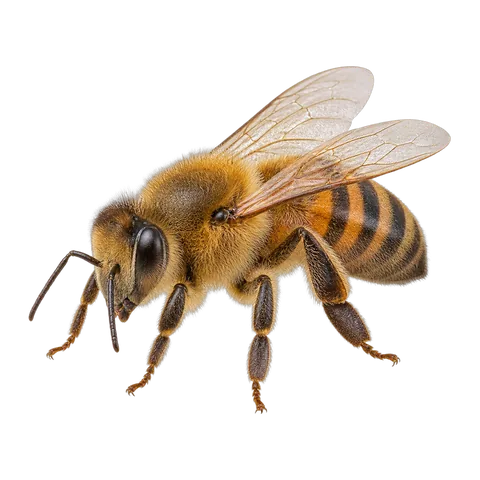
Masonry bees are small, solitary bees that nest in soft or crumbling mortar, often on a warm, south-facing wall. Each female digs or reuses a small hole, fills it with pollen, lays her eggs in separate cells and seals the entrance with a mud cap. A busy wall can have dozens of holes.
The bees choose mortar that is already weak. Lime mortar on older houses and sandy mortar on newer ones are both common. Healthy, hard mortar is rarely used. The holes can deepen over the years, though, as new bees hatch and reuse the same stretch.
Why timing matters
The adults are only about for a few weeks in spring. By June most have finished nesting, and the wall looks empty. It is not. The young bees grow inside the mortar through summer, stay there through autumn and winter, and come out as adults the following spring.
This is why holes should never be filled, sealed or repointed in autumn or winter. Doing so traps a whole generation of bees inside the wall. Sealant or silicone pushed into the holes has the same effect and does not fix the weak mortar behind it.
Put up a bee hotel first
A bee hotel gives the bees somewhere else to nest, so fewer new holes are dug in the wall. Fix it in late winter or very early spring, before the bees come out, on the same sunny side of the house and close to the affected wall, at about head height or above.
Choose one with hollow tubes or drilled wooden blocks, with holes of different sizes and a solid back. Over one or two seasons, many of the bees that hatch from the wall will move into the hotel.
Repointing in stages
Once the hotel is in place, plan the repairs over more than one year. This keeps the wall sound and gives the young bees time to leave.
- Look at the holes in late spring. An open hole usually means the bee has come out. A hole closed with a small mud cap still has young inside.
- Repoint one section at a time, starting with stretches where the holes are open and activity has stopped.
- Leave sections with capped holes until the following spring, after those bees have emerged.
- Use a mortar that suits the wall. Older brick and stone usually need a lime mortar, so ask a builder who works with older buildings.
- Check the wall each spring for new holes and deal with small patches early.
No treatment needed
Masonry bees are harmless and rarely sting, and no treatment is needed. They are useful pollinators for fruit trees and garden plants. We do not treat masonry bees, and we would not advise anyone to spray a wall where they nest.
When to call a professional
If you are not sure the insects in your wall are masonry bees, send us a photo on WhatsApp. Small holes in mortar can also be made by other insects, and bees going into a single larger gap may be a honey bee colony, which needs a different approach. We can tell you what you have and what to do next.
For the brickwork itself, a builder or repointing specialist is the right person. Our advice is free.