Why pigeons choose balconies
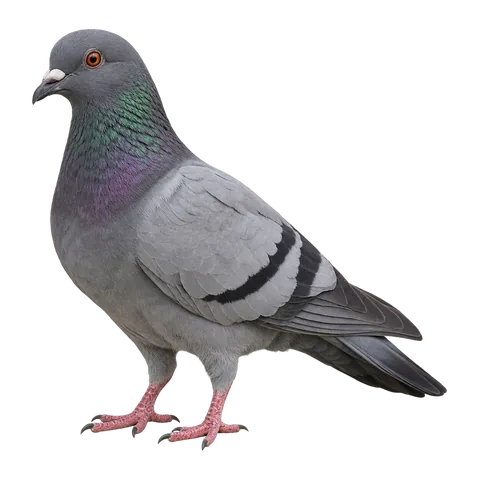
Feral pigeons come from birds that nest on cliff ledges, and a balcony on the upper floors of a block is a close match. It is out of the wind and rain, high enough to feel safe and often has a corner behind a plant pot, a stored bike or an air-conditioning unit to build in.
In towns, pigeons can breed through most of the year. Once a pair has nested, they tend to come back to the same spot, and the droppings and cooing build up quickly.
Nests and the law
Pigeons, their eggs and active nests are protected under the Wildlife and Countryside Act 1981. You must not move or destroy a nest that has eggs or chicks in it. Pigeons in towns are controlled by proofing and deterrence, so the aim is to stop them landing and nesting in the first place.
An empty nest with no eggs can be cleared away. If you are not sure whether a nest is still in use, leave it and get advice. The chicks usually leave within a couple of months of the eggs being laid, and the balcony can be proofed once they have gone.
Cleaning up droppings
Pigeon droppings are acidic and stain stone, render and furniture. Dried droppings can carry bacteria and fungi, and the dust they give off when disturbed is the main risk to health.
- Wear gloves and a dust mask, and keep children and pets off the balcony while you clean.
- Dampen the droppings with water and a little disinfectant first. Do not dry-sweep them or use a leaf blower.
- Scrape them into a bag, seal it and put it in the general waste bin.
- Wash the area with hot soapy water and disinfectant, then rinse.
What keeps pigeons off
Plastic owls, reflective tape and spinning devices may work for a few days, but pigeons soon learn they are harmless. Proofing that changes the balcony so birds cannot land or get in lasts much longer.
- Netting across the open side of the balcony, fixed to a frame so it sits tight. This is the most reliable option where pigeons are nesting.
- Spikes or low-profile wire along railings, ledges and the tops of air-conditioning units, where birds perch.
- Mesh to close the gaps behind units and boxes fixed to the wall, where birds build out of sight.
- Clearing stored items, so there are fewer sheltered corners.
Flats, leases and neighbours
In a block of flats, the balcony structure and outside walls usually belong to the freeholder. Check your lease or ask the managing agent before anything is fixed to walls or railings, as some blocks have rules about how netting should look.
Pigeons pushed off one balcony often move to the next one along. Where several flats are affected, the managing agent can arrange proofing for a whole side of the building at once. Ask neighbours not to feed pigeons, as a steady food supply keeps them in the area.
When to call a professional
Clearing a light covering of droppings yourself is fine. Call a professional if there are nests you need advice on, if droppings have built up into a thick layer, or if fitting netting would mean leaning out from a height.
We survey the balcony, check for active nests, clear droppings in protective kit and fit netting, spikes or wire to suit the building. Quotes are free with no call-out charge, and you can WhatsApp a photo of the balcony for a fast answer on what would work.