Why new homes get them
A newly built house has a lot of water in it. Wet plaster, concrete floors, screed and mortar all take months to dry out, and much of that moisture comes out into the rooms during the first year. Mould can grow on damp plaster, behind furniture and in cupboards, often too faintly to see.
Plaster beetles, also called mould beetles, feed on that mould. They are tiny, 1 to 3 mm long and brown or black, and they turn up on walls, windowsills, skirting boards and inside kitchen cupboards. Many people first see them when the heating goes on in autumn and the house starts to dry.
Harm to people and homes
No. Plaster beetles do not bite, do not eat the building and do not damage furniture. They are a sign that some rooms are damp enough for mould, which is worth fixing for its own sake.
Drying the house out
The beetles go when the mould goes, and the mould goes when the house is dry. These steps help most new homes.
- Keep the heating on at a steady, moderate level through the first winter. Short blasts of high heat dry the plaster unevenly and can cause cracking.
- Leave trickle vents in the windows open, and run extractor fans in the kitchen and bathroom when cooking and showering.
- Open windows for a while each day when the weather allows.
- Dry washing outdoors or in a tumble dryer that vents outside.
- Run a dehumidifier in the dampest rooms and empty it often. A full tank in a day is common in a new house.
- Leave a gap between furniture and outside walls, and keep wardrobe and cupboard doors open now and then so air can reach the back.
Cleaning up
Vacuum up the beetles you can see, and wipe any mould off walls, sills and the backs of cupboards with a mould cleaner. Check food cupboards too. Plaster beetles will feed on damp, mouldy food, so throw out anything that has gone off and store dry goods in sealed containers.
Insecticide sprays are not much use. They kill the beetles you hit, but more will appear while the walls are still damp.
Beetles that are not plaster beetles
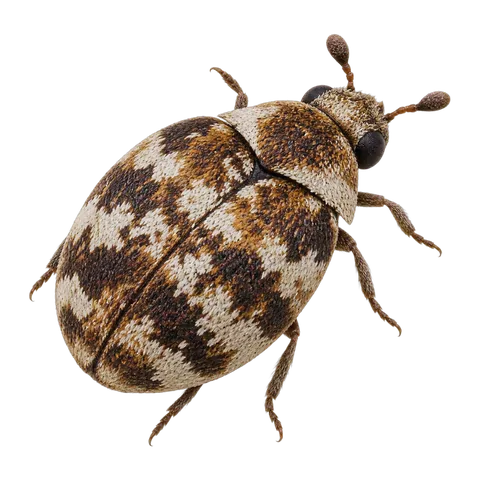
If the beetles are reddish-brown, slightly larger and mostly in packets of flour, pasta or spices, they may be biscuit beetles. Small round beetles with mottled backs near windows in spring, or hairy brown larvae in carpets, point to carpet beetles. Both need a different approach, so it helps to get a clear photo.
If damp stays in one spot after the rest of the house has dried, look for a leak, a cold spot or a fault in the build. Add it to your snagging list and report it to your builder.
When to call a professional
Most plaster beetle problems end once the house dries, and they do not need a pest treatment. Get in touch if you are not sure what the beetles are, if they are in food or carpets, or if numbers are still rising after a few months of heating and ventilation.
You can WhatsApp us a close-up photo for a fast answer. We will tell you what the beetle is and whether there is anything to treat, and quotes are free if there is.