
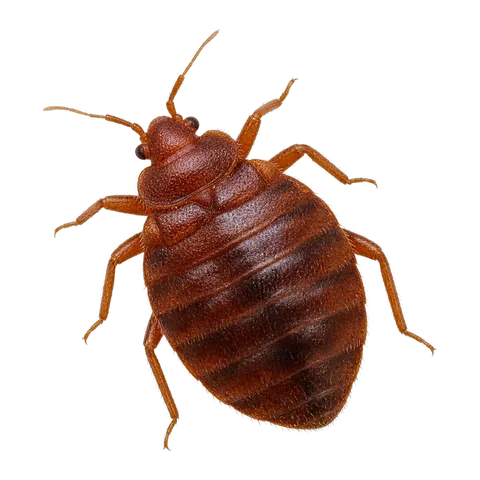
What bed bugs are
The common bed bug is a wingless insect that lives on human blood. Adults are oval, flat and reddish-brown, about the size of an apple pip, with six legs and short antennae. After a meal the body swells, grows longer and turns a darker red. Bed bugs cannot fly or jump. They walk, and they can cover a few metres in a night to reach someone asleep.
Insects mistaken for bed bugs
Several small insects found in bedrooms look similar at a glance. A close-up photo usually settles it.
- Carpet beetles: small, round beetles mottled brown, white and yellow. Their hairy, striped larvae live in carpet edges and under beds.
- Booklice: tiny, pale and soft-bodied, found on damp walls, books and window frames. They do not bite.
- Spider beetles: round, shiny and reddish-brown with long legs, found in larders and older buildings.
- Fleas: smaller, flattened from side to side, and they jump. Their bites are usually around the ankles.
- Bat bugs: close relatives of bed bugs that live with bats in roof spaces. Bats and their roosts are protected by law, so these need advice before anything is done.
How bed bugs feed
Bed bugs find people by the warmth of their bodies and the carbon dioxide in their breath. Most feed in the early hours, when people are deeply asleep. A bug pierces the skin, injects saliva that numbs the spot and stops the blood clotting, and feeds for several minutes before walking back to its hiding place. Most people feel nothing at the time.
Between meals, bed bugs cluster in cracks and seams close to the bed. They can go weeks or months without feeding, so a spare room or a flat left empty can still have them.
Why sprays often fail
Many bed bug populations have built up resistance to common insecticides, including the ones in shop-bought sprays and foggers. A spray that kills a few bugs on contact can miss the rest and drive the survivors deeper into walls, sockets and the next room. Eggs are also hard to kill with most sprays. Professional treatment uses products chosen with resistance in mind, applied over two visits, or heat that reaches every stage at once.
Health effects
Bed bugs are not known to spread disease to people, but the bites can still cause real problems. Reactions range from nothing at all to itchy red bumps or larger swollen welts, and scratching can lead to skin infections. A pharmacist can suggest a cream or antihistamine for the itch, and a GP can help with infected or severe reactions.
Bed bugs are also hard on sleep. Many people feel anxious in their own bed and keep checking the sheets long after the bugs have gone. Clearing the infestation fully, with a check afterwards, is what lets most people sleep normally again.
When to call a professional
If you have found an insect and are not sure what it is, put it in a clear bag or take a close-up photo and send it to us on WhatsApp. If it is a bed bug, treatment works best when it starts early, before the bugs spread to other rooms and furniture. We offer a two-visit spray treatment or heat, and if bed bugs come back within 90 days of the last treatment, the return visit is free.