
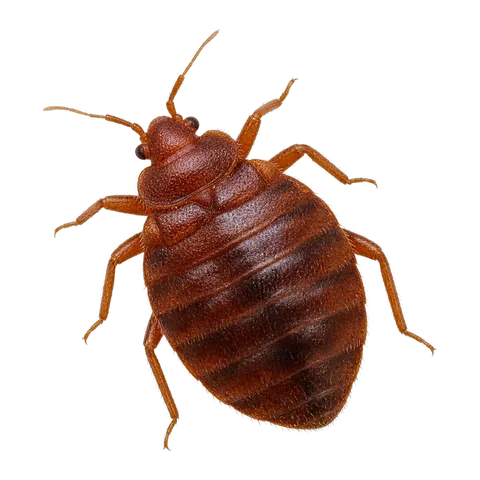
Bed bug eggs
Bed bug eggs are about 1 mm long, white or pearly, and shaped like a tiny grain of rice. Females glue them into cracks, seams and rough surfaces, so they do not brush or wipe away easily. Eggs close to hatching show a dark eye spot at one end, and empty shells look flat and see-through.
Where eggs are laid
Most eggs are within a couple of metres of where someone sleeps, since adults stay close to their next meal. Common places include:
- Seams, piping and buttons of the mattress and divan base.
- Joints and screw holes in the bed frame and headboard.
- Inside bedside drawers and behind skirting boards near the bed.
- Under loose wallpaper and behind picture frames.
- Folds of curtains, and the seams of a sofa if someone sleeps on it.
Nymphs
In a warm room, eggs hatch in about one to two weeks. The young bed bugs, called nymphs, are pale and almost see-through, about 1 mm long at first, and turn bright red after feeding. They need a blood meal before each of their five moults on the way to adulthood, and leave a pale empty skin behind each time. Nymphs hide in the same cracks and seams as adults, and because they are so small and pale they are easy to miss until they have fed.
The full life cycle
In a heated home, a bed bug can grow from egg to adult in around five to eight weeks. An adult female lays a few eggs a day for much of her life, which lasts several months. Adults and older nymphs can go for weeks or months without feeding, which is why a room left empty for a while can still have bed bugs in it. Growth slows in a cold room, so a spare bedroom with the heating off can hold bugs that start breeding again once it warms up.
Why eggs make treatment harder
Many sprays kill live bugs but not every egg, so new nymphs can hatch after the first visit. This is why a spray treatment has a second visit about two weeks later, timed to catch nymphs that have hatched in between. Heat treatment takes the room above the temperature that kills eggs, nymphs and adults, and most rooms are done in a single day.
When to call a professional
If you can see eggs or empty skins, bed bugs are breeding and the numbers will grow. A professional treatment covers every stage of the life cycle, and we tell you how to prepare the room so it works. If bed bugs come back within 90 days of the last treatment, the return visit is free.