
At a glance
- What it looks like
- Round, furry bees 10 to 25 mm long, usually black with yellow, white or orange bands. The tree bumblebee has a ginger thorax, a black body and a white tail.
- Where you find it
- Nests in bird boxes, compost heaps, under sheds and decking, and in old mouse holes from spring to summer. A nest lasts a few months and dies out by late summer.
- Is it harmful?
- Bumblebees are gentle and rarely sting unless the nest is disturbed. They are important pollinators, and several species are in decline.
- What to do
- Leave the nest alone if you can, as it will end on its own. We do not kill bumblebees, but we can advise on keeping people and pets away from the nest until then.
How a bumblebee colony lives
A queen wakes from winter in early spring and looks for a dry, sheltered spot to start a nest. She raises the first workers herself, and the colony grows to a few dozen or a few hundred bees, far fewer than a wasp or honey bee nest. Late in the season new queens and males are raised, the new queens mate and dig in for winter, and the old nest dies.
Bumblebees, wasps and honey bees
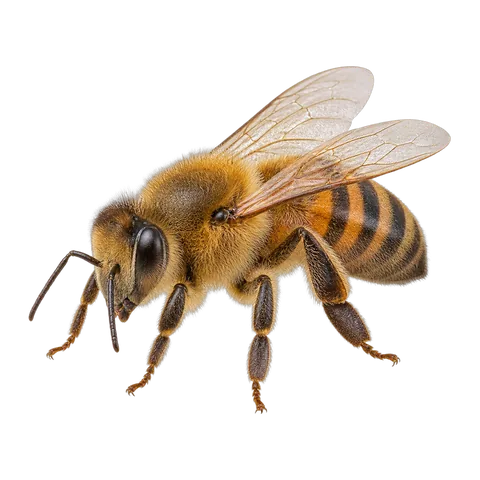
Bumblebees are round and covered in dense hair, and they fly slowly from flower to flower. Wasps are smooth and shiny, with bright yellow and black stripes and a narrow waist, and they are drawn to sweet food and bins. Honey bees are slimmer, golden brown and less hairy, and their colonies last for years.
Living with a nest
Keep children and pets away from the entrance, and avoid mowing, digging or blocking the hole while the nest is active. If the nest is next to a door or path, a temporary screen or a change of route is often enough. Once the bees have gone, block the gap so a new queen does not move in next spring.
Questions about bumblebees
Do bumblebees sting?
They can, but they rarely do. Most stings happen when a bee is trapped, trodden on or its nest is disturbed.
Can a bumblebee nest be moved?
Moving a nest is hard on the colony and often fails. In most cases it is better to wait a few weeks until it dies out on its own.
Will bumblebees damage my house?
No. They use spaces that already exist, such as bird boxes, gaps under sheds or the eaves, and do not chew into the building.