
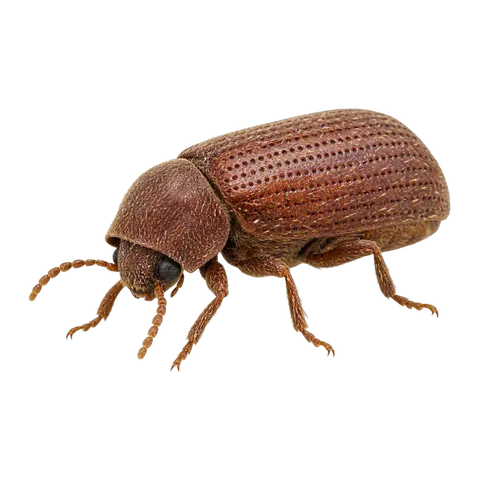
At a glance
- What it looks like
- A chocolate-brown beetle 6 to 9 mm long with patches of yellowish hair that give it a mottled look. Exit holes in the timber are round and about 3 mm across.
- Where you find it
- In old hardwood timbers, mostly oak, in historic buildings, churches and old houses, especially where the wood is damp or decayed. Adults tap on the wood from April to June to find a mate.
- Is it harmful?
- They are harmless to people, but the larvae tunnel through structural timbers for years and can weaken them.
- What to do
- Have a timber survey done to find out whether the attack is active and how far it has spread. Treatment usually means fixing damp as well as treating the timber.
Life cycle
Females lay eggs in cracks and old exit holes in damp, decayed hardwood. The larvae tunnel through the timber for several years, sometimes ten or more, before pupating near the surface. Adults chew their way out in spring, leaving round holes about 3 mm across, and tap their heads against the wood to find a mate.
Deathwatch beetle or common furniture beetle
The common furniture beetle is the usual cause of woodworm in homes and attacks softwood floorboards, joists and furniture. Its exit holes are smaller, about 1 to 2 mm across, and the dust it leaves is fine and gritty. Deathwatch beetle leaves larger holes and bun-shaped pellets in its dust, and it is almost always in old, damp hardwood.
Keeping timbers sound
Deathwatch beetle depends on timber that is damp and already decaying. Keeping roofs, gutters and walls watertight, and letting air reach the ends of beams, makes timber much less suitable for it. Fresh, pale dust below holes in spring suggests the attack is still active.
Questions about deathwatch beetle
Is the tapping a sign of an active attack?
Tapping in spring means adult beetles are present, so it is worth having the timbers surveyed. Old holes with dark edges and no fresh dust may be from an attack that has ended.
Can deathwatch beetle spread to my furniture?
It is rare. The beetle needs damp, decayed hardwood, so dry modern furniture and softwood are at little risk.