
At a glance
- What it looks like
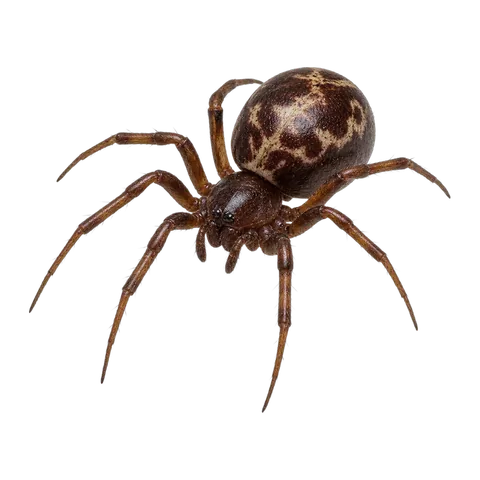
- A dark brown spider with a round, shiny body 7 to 14 mm long, cream markings on the abdomen and reddish-brown legs. The most common UK species is the noble false widow.
- Where you find it
- In and around homes across southern England and spreading north, in window frames, sheds, garages and behind furniture. They live all year and are seen more often in autumn.
- Is it harmful?
- Bites are rare and usually feel like a bee sting, with pain and swelling. Get medical advice if a bite becomes very swollen, red or hot, as it may be infected.
- What to do
- Remove webs and spiders with a vacuum, clear clutter and seal gaps around windows. A professional treatment helps where there are many in one place.
Life cycle
Females lay eggs in round, white, silky sacs hidden in their webs, often in window frames or sheds. The spiderlings grow slowly, and females can live for several years. Because they live in sheltered spots around buildings, they can be found in every month of the year.
False widows and look-alikes
The rabbit hutch spider and the cupboard spider are close relatives with the same round shape, but they are darker and have fainter markings. The black widow is not found living wild in the UK. Garden spiders have a more pointed body and build large wheel-shaped webs in the open, while false widows build untidy, tangled webs in corners.
Keeping numbers down
Vacuum webs and egg sacs from window frames, sheds and garages every few weeks. Keep outside lights off where you can, as they draw in the insects that spiders feed on. Seal gaps around window frames and clear stored boxes where webs build up.
Questions about false widow spider
Are false widow spiders dangerous?
Most bites cause pain and swelling like a bee sting and settle within a few days. Contact NHS 111 or your GP if a bite becomes very swollen, red, hot or painful.
Why do I see more of them in autumn?
Adult males leave their webs in autumn to look for a mate, so they turn up on walls and floors. Females stay in their webs all year.