
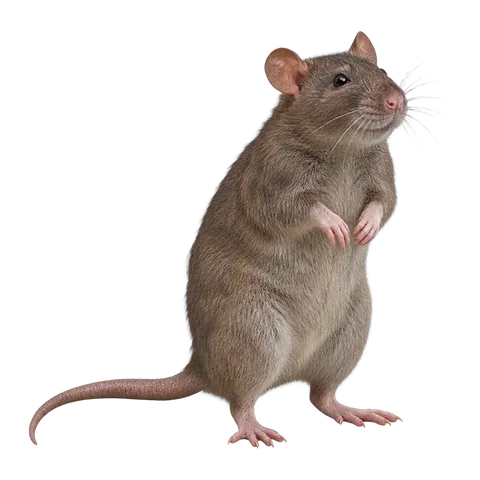
At a glance
- What it looks like
- Scratching or scurrying at night usually means rats or mice, and heavier running at dawn and dusk often means grey squirrels. Droppings help: mouse droppings are 3 to 6 mm long, rat droppings 10 to 14 mm.
- Where you find it
- In lofts, eaves and ceiling voids, most often from autumn to spring when animals move indoors. In and around the Chilterns, loud noises from June to October may be edible dormice (glis glis).
- Is it harmful?
- Rats, mice and squirrels chew wiring, pipes and insulation, which can cause fires and leaks. Rats and mice also spread bacteria through their droppings and urine.
- What to do
- Look for droppings and gnawing, and book an inspection to confirm which animal it is. Edible dormice can only be controlled under a licence, and bats and their roosts are protected by law, so they must not be disturbed.
Telling the animals apart
Mice make light, quick scratching, mostly in the evening and at night. Rats are heavier and louder, and you may hear gnawing or something being dragged. Grey squirrels are active in daylight, with running and thumping mostly early in the morning and late in the afternoon.
Birds nesting in the eaves scratch and chirp in spring and early summer, mostly during the day. Edible dormice are loud at night from early summer into autumn and are found mainly in and around the Chilterns.
Signs to check for
Look for droppings near the hatch, along the joists and on top of the insulation. Chewed cables, tunnels through the insulation and shredded material all suggest rodents or squirrels. Outside, check for holes under the eaves, gaps by the fascia boards and damaged roof vents.
Keeping animals out of the loft
Cut back branches that hang over the roof, as squirrels and rats use them to reach the eaves. Fit mesh over gaps and vents, and make sure fascia and soffit boards are sound. Only seal holes once you are sure the animals are out, or they may be trapped inside.
Questions about scratching noises in the loft
Could it be bats?
Bats are almost silent to human ears, so you are more likely to find droppings below a roost than hear them. If you suspect bats, do not block gaps or disturb them, as they are protected by law.
Is it safe to go into the loft and look?
Yes, with care. Wear gloves and a dust mask if there are droppings, and do not touch or try to catch any animal.